Self-hosting
How This Site Is Built, Shipped and Monitored
The infrastructure behind this portfolio: a Docker image built in CI, deployed by tag to my own VPS, with live server stats from Beszel and cookieless analytics.
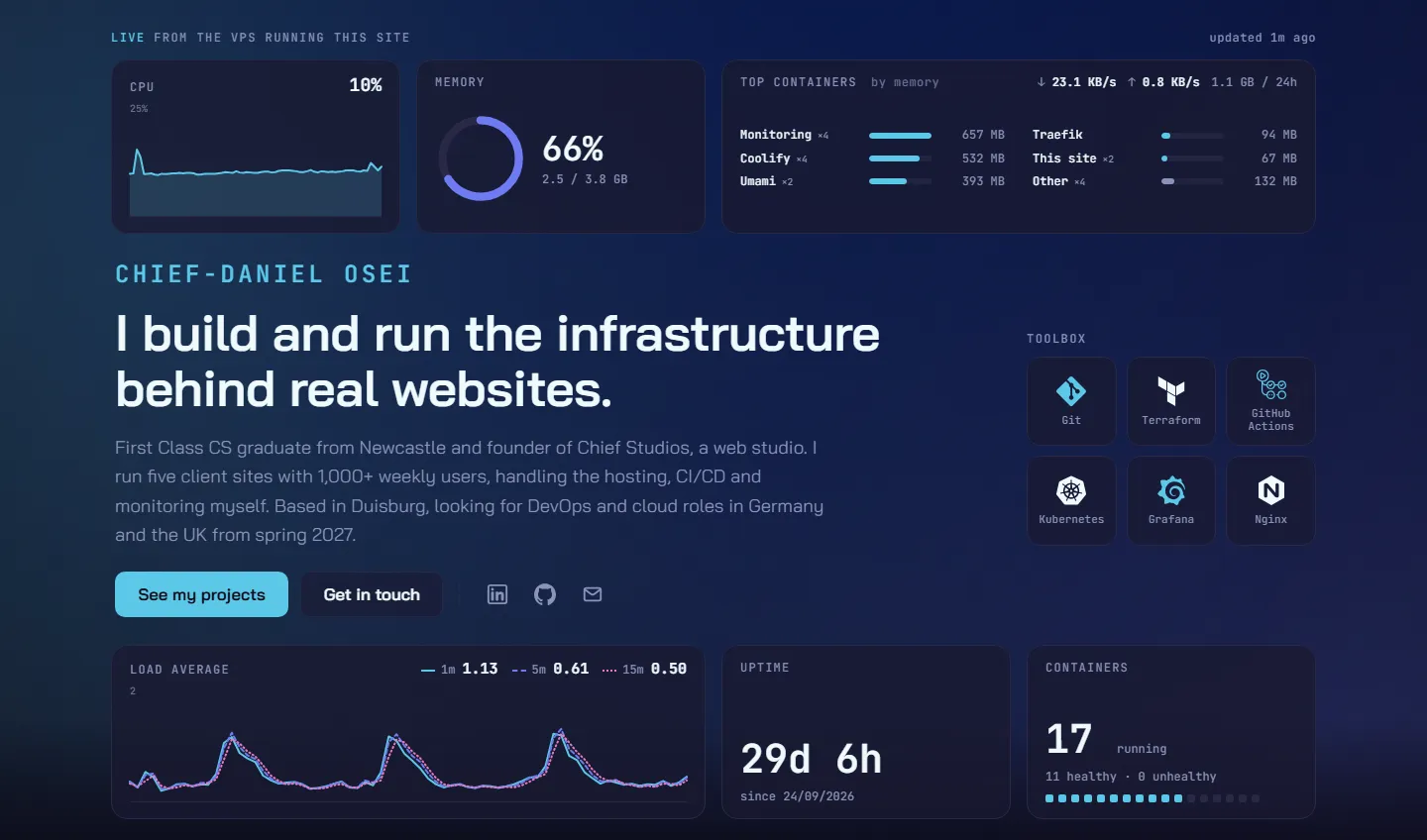
How This Site Is Built, Shipped and Monitored
This site is both my portfolio and a small production deployment that I run myself. The pages are Astro and Tailwind. The more interesting part is everything around them: how the site is built, shipped, monitored and measured. This post walks through that setup.
Build and deploy
- Container image: a multi-stage Dockerfile with a pinned Node base image, a non-root runtime user, and only the production output copied into the final layer.
- CI: GitHub Actions builds the image on every push to
devandmainand pushes it to GHCR with two tags. One is a moving branch tag, and the other is an immutablebranch-<sha>tag that doubles as the rollback target. I wrote about why the build runs in CI and not on the server in Offloading Docker Builds with GHCR. - Deploy by tag: the workflow calls the Coolify API with a tag derived from the repo name and branch, so no resource IDs live in the repo. The call logs the HTTP status and response body and fails on anything but a 2xx, because a bare
curl -fhides the body that explains what went wrong. - Pull request smoke test: every PR builds the site, builds the Docker image, starts the container and checks the key routes before anything can merge.
- Health checks: a
/api/healthroute is polled by both CI and a DockerHEALTHCHECK. The check is written with Node because the Alpine runtime image has nocurl, and a check that quietly can’t run is worse than no check.
Live server stats
The panel at the top of the homepage shows the server this site runs on. The browser never talks to the monitoring system. A server-side route logs in to my Beszel hub with a read-only user and returns only a whitelisted set of numbers: CPU, memory, load, network, uptime and containers.
- Results are cached for 45 seconds, and concurrent requests share a single call to the hub.
- If the hub is unreachable, the last good reading is shown and marked stale. With nothing to show, the panel hides instead of breaking.
- Container names are mapped to a short allowlist of labels, and everything else is grouped as “Other”, so nothing private is exposed.
- The charts are inline SVG with no chart library, and the page respects
prefers-reduced-motion.
Analytics
I use self-hosted, cookieless Umami with a handful of click events. The script is left out of development builds and restricted to the production hostname, so staging and local runs are never counted.
Content and design
- Projects and posts are Astro content collections with typed schemas. Technology tags come from one validated list, so a misspelt tag fails the build instead of shipping.
- The project pop-ups are pre-rendered at build time, with no dynamic routes.
- The design started in Figma wireframes, and the dark theme uses one small palette defined as CSS variables.